How to Get Around Dordogne Without a Car
A holiday cottage with vineyard views can feel wonderfully remote until you need to reach a restaurant, railway station or evening event. Dordogne is a large, rural département, and how to get around Dordogne without a car depends less on finding one transport option than on planning the right combination for where you are staying.
Trains and buses can work well between larger towns. They are less useful for scattered hamlets, countryside gîtes, wedding venues and restaurants outside town. For visitors arriving from abroad, the easiest approach is usually to arrange the key journeys in advance, then use walking, cycling or local transport where it genuinely suits the day.
Start with the area you are staying in
Dordogne is often described as one destination, but its towns are spread across long river valleys and rolling countryside. A stay in central Périgueux is very different from a stay near Sarlat, Bergerac, Eymet, Brantôme or a village in the Vézère Valley.
If your accommodation is in a town centre, you may be able to walk to bakeries, markets, cafés and some restaurants. A railway station or bus stop may also be close by. If you are staying in a rural property, assume that transport will need to be arranged for most longer journeys. Even a destination that looks close on a map can involve narrow country roads and no practical footpath.
Before booking accommodation, ask four useful questions: how far is the nearest station, is there a food shop or restaurant within walking distance, are taxis available locally, and can the property host recommend a pick-up point? These details make a bigger difference than the straight-line distance between places.
Use trains for the main Dordogne corridors
Rail is the most straightforward public transport option for certain routes, particularly when connecting Dordogne with Bordeaux, Bergerac, Périgueux, Sarlat or further regional destinations. It can be a sensible choice for a day in a larger town, an onward connection or a journey from an airport area where a station is accessible.
The limitation is that rail lines do not reach every popular village or countryside address. A train journey may still leave you several kilometres from your accommodation, and station taxis cannot always be relied upon without a prior booking. This is especially relevant for late afternoon arrivals, Sunday travel and journeys outside the busiest visitor season.
For airport arrivals, allow enough time for luggage collection, possible flight delays and the transfer from the airport to the station if needed. A rail itinerary can be good value for independent travellers with light luggage and a flexible schedule. It is not always the simplest choice for families, groups, guests arriving after a long flight or anyone heading directly to a remote property.
Bergerac, Périgueux and Sarlat are useful bases
Bergerac and Périgueux have the services of proper working towns, including stations, shops and restaurants. Sarlat is a particularly popular base for visitors wanting to see the Dordogne Valley, although accommodation outside its historic centre may still require transport.
Staying close to one of these towns can reduce the number of private journeys you need. It also gives you a realistic fallback if weather, market days or changed plans make walking and cycling less appealing.
Buses can help, but check the timetable carefully
Local and regional buses connect some towns and villages, but they are not designed as a frequent, all-day visitor network. Services can be limited, may run only on certain days, and often change outside school terms or peak periods.
A bus is best treated as a useful option for a specific, confirmed journey rather than the foundation of an entire holiday plan. Check the current timetable shortly before travelling, including the return journey. Missing the final bus of the day in a small town can turn a relaxed lunch into a difficult logistical problem.
Buses can be particularly practical if you are travelling alone, are happy to work around fixed times and are visiting a town rather than a rural attraction. They are less suitable for a dinner reservation, a wine tasting, a wedding, or a day with several stops.
Arrange private transport for rural and time-sensitive journeys
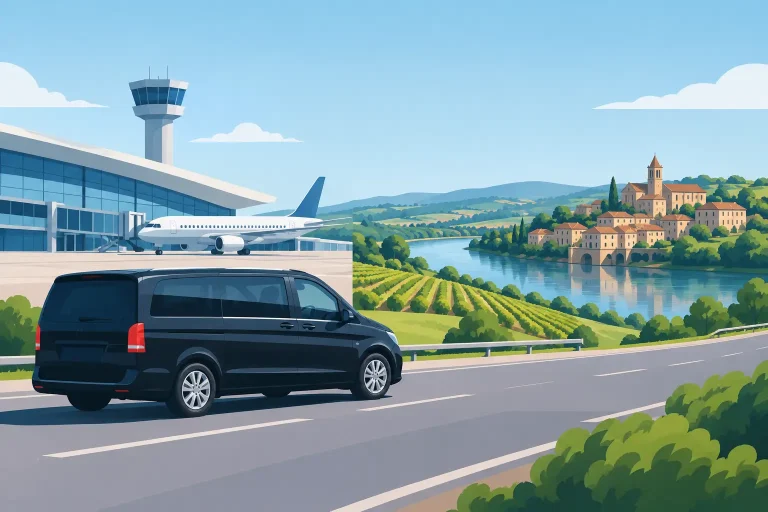
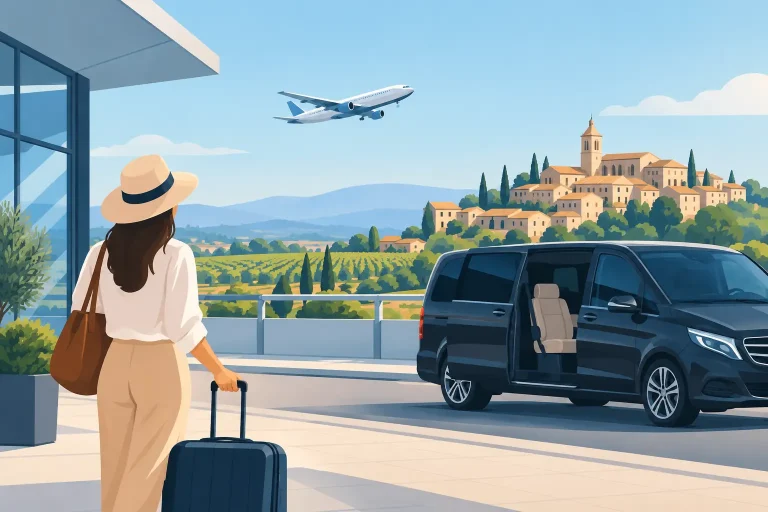
For door-to-door travel, a pre-booked licensed taxi or private chauffeur is usually the most dependable answer. This is the option to consider for airport transfers, station collections, rural accommodation, restaurant evenings, wine tours and events where you need to arrive at a fixed time.
It removes several common problems at once: finding the correct address, managing luggage, understanding a local timetable, and getting home safely after a drink. It is also more practical when two or more people are travelling together, particularly if the alternative involves separate train, bus and taxi connections.
AC Private Chauffeur provides pre-arranged, English-speaking transport across Dordogne and South West France, including journeys to and from Bordeaux, Bergerac and Toulouse airports. The service is designed around direct communication and a planned itinerary, rather than hoping that a vehicle will be available at a rank.
For a quote or availability check, provide your pick-up address, destination, date, required time, passenger numbers and any relevant flight or train details. If you have a return journey, include that as well. This is especially helpful for properties with difficult access, large luggage, child seats or a collection after an event.
Plan wine tastings and restaurant evenings properly
Dordogne and the nearby wine regions reward unhurried days, but they are not ideal places to rely on spontaneous transport after lunch. Vineyards, country restaurants and château venues are often outside town, and mobile reception can be variable in rural areas.
If you are visiting wineries, arrange both outward and return transport before you start. The same applies to evenings in Bergerac, Sarlat, Saint-Émilion or a village restaurant. A designated driver means everyone in the group can enjoy the occasion, and it avoids the uncomfortable choice between leaving early or driving after wine.
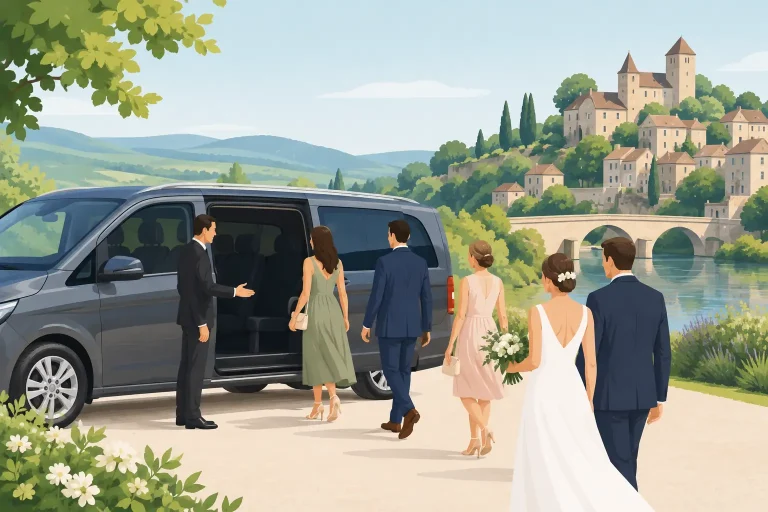
For a wedding, ask the couple or venue whether there is a set transport plan for guests. If not, book your journeys early. Rural wedding venues may be some distance from hotels and holiday homes, and several guests may require transport at the same times.
Walk and cycle only where they fit the route
Walking is one of the pleasures of Dordogne, especially in historic centres such as Sarlat, Périgueux and Bergerac, on riverside paths, and around villages where you can take your time. Cycling can also be rewarding on planned greenways and quieter routes.
However, do not assume every country lane is suitable for pedestrians or casual cyclists. Roads can be narrow, unlit and hilly, with limited verges. Summer heat also changes what feels realistic, especially after a long lunch or with children. Use walking and cycling for local exploration, rather than as the only way to move between distant attractions.
E-bikes can make hills more manageable, but you will still need to consider collection points, charging, weather and what happens if you want to visit several places in one day. For some travellers, a chauffeur for the longer transfer and a walk or cycle once there is the best balance.
Build your itinerary around fewer bases and fewer transfers
The most relaxing car-free Dordogne holiday is rarely the one with a different destination every day. Choose one or two bases, group nearby sights together and reserve transport for the journeys that cannot be done comfortably on foot or by public service.
For example, you might arrive at Bordeaux or Bergerac, take a pre-arranged transfer to your accommodation, spend local days walking and visiting markets, then book transport for a wine tour, dinner or onward station journey. This costs less in time and stress than trying to connect several isolated villages by public transport.
It also pays to keep plans flexible on arrival day. Flights can be late, baggage can take time, and rural addresses are not always easy to find in the dark. A door-to-door collection with your accommodation details already confirmed gives the holiday a calmer start.
How to get around Dordogne without a car: the practical answer
There is no single car-free solution for all of Dordogne. Trains are useful between key towns, buses can fill occasional gaps, and walking or cycling works well for local days. But for rural stays, airports, special occasions and journeys with a timetable, pre-arranged private transport is the dependable option.
Plan the essential transfers before you travel, rather than leaving them until you are standing outside a station or finishing dinner in a village. With the important journeys covered, you are free to enjoy Dordogne at the pace it deserves.