How to Arrange Vineyard Transport in France
A wine-tasting day in South West France is at its best when nobody is watching the clock, trying to find the next village, or deciding who will drive after a generous tasting. Knowing how to arrange vineyard transport before you arrive means you can enjoy the wines, countryside and conversation while a licensed driver takes care of the route.
Vineyards around Bordeaux, Saint-Émilion, Bergerac and the Dordogne are often spread across rural roads and small villages. Public transport may be limited, particularly outside larger towns, and taxis are not always waiting nearby when a visit ends. Pre-arranged private transport gives you a clear plan for the day, with collection from your accommodation and a safe return at the end.
Start with the shape of your day
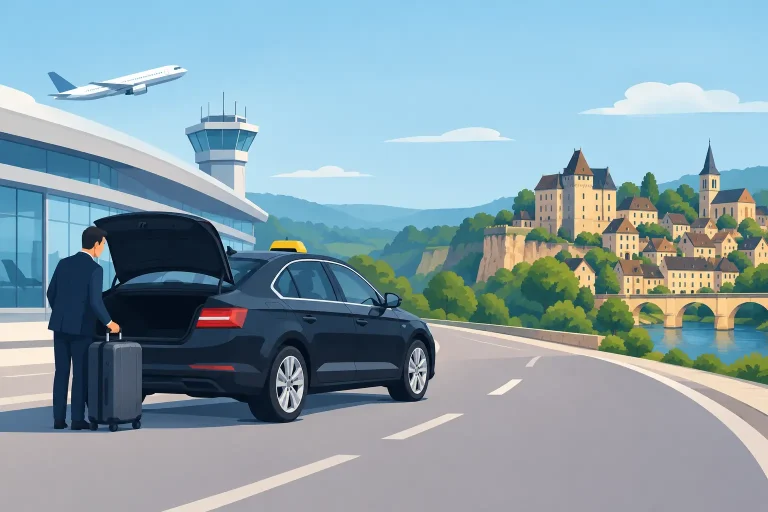
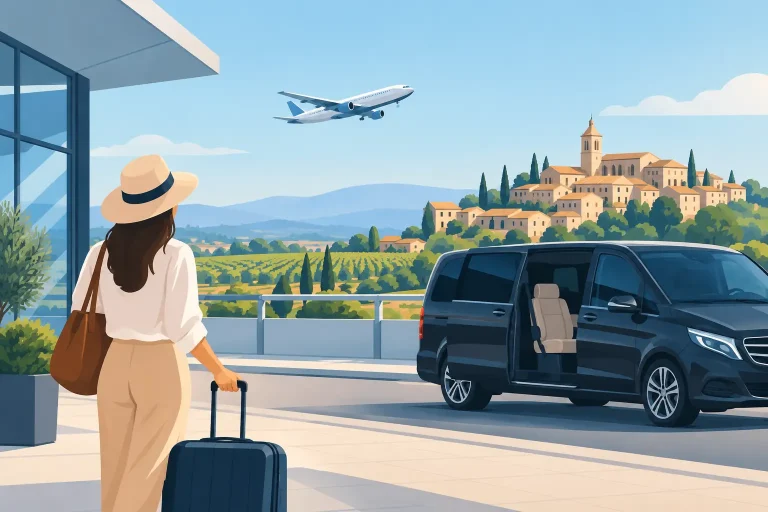
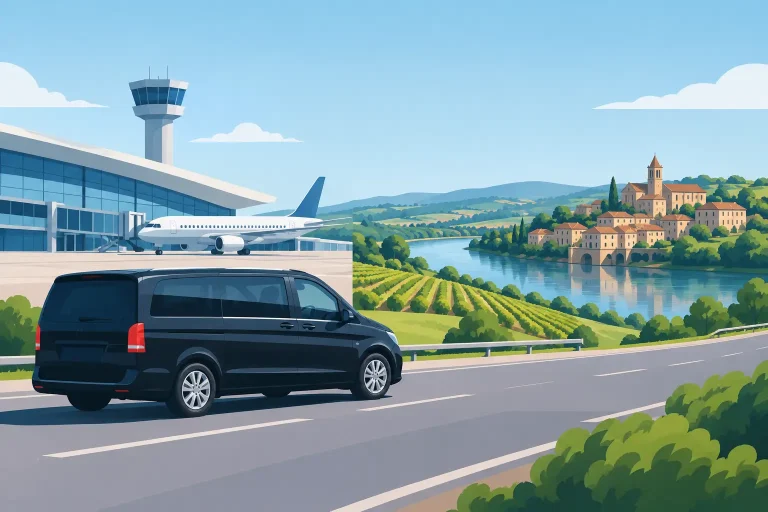
Before booking transport, decide what sort of vineyard visit you want. A couple staying near Saint-Émilion may want two cellar-door tastings followed by lunch in the town. A family in the Dordogne might prefer a relaxed afternoon at one estate, with time to return before dinner. A group arriving from Bordeaux Airport may need a direct transfer to their accommodation, with winery visits planned for another day.
Your route should allow time for travel as well as tasting. On a map, estates can appear close together, but country roads, parking arrangements and appointment times can make the journey longer than expected. A good itinerary usually leaves space between visits rather than treating the day as a race from one address to the next.
Think about whether you require a one-way journey, a return trip, or a driver available throughout the day. A return journey can suit one tasting at a nearby vineyard. For several appointments in different locations, a dedicated chauffeur service is normally the more practical choice. Your driver remains available between stops and can take account of changes to your plans where possible.
How to arrange vineyard transport around your bookings
It is best to confirm vineyard appointments first, especially during spring, summer and the harvest period. Many estates welcome visitors only by reservation, and tasting times may be fixed. Once you have these details, transport can be arranged around the schedule rather than guessed in advance.
When requesting availability, provide the full collection address, not only the name of a village or holiday property. Rural properties can be difficult to locate without a precise address, and some are several minutes from the nearest town. Include the name and address of each vineyard, the appointment time, and whether you expect to stop for lunch or visit another town during the day.
For an accurate quote, a driver will also need the date, preferred collection time, number of passengers and amount of luggage if the journey includes an airport transfer. Mention children, pushchairs, mobility requirements or larger wine purchases in advance. These details help ensure the vehicle and timing are suitable.
A simple message by WhatsApp or telephone can include:
- your pick-up address and final drop-off address
- the date and collection time
- the names and addresses of booked vineyards
- passenger numbers and any child-seat requirements
- whether you need a return journey or a driver for the full itinerary
Clear information at the start avoids uncertainty on the day and makes it easier to plan a comfortable route.
Choose a realistic vineyard route
The best route depends on where you are staying. Visitors based in Bordeaux may choose Médoc, Graves, Pessac-Léognan or Saint-Émilion. Those staying in or near Bergerac have access to vineyards producing Monbazillac, Pécharmant and local Dordogne wines. From Lot-et-Garonne, journeys may combine countryside dining with estates around Duras, Buzet or Bordeaux wine country, depending on the time available.
Trying to cover several wine regions in one day is rarely enjoyable. Bordeaux to Saint-Émilion is a very different day from Bergerac to Monbazillac, and a rural pick-up in the Dordogne may add significant travelling time before the first tasting. It is usually better to choose one area and visit it properly.
Two tastings and a proper lunch often make for an excellent day. Three visits may work if the estates are close together and appointments are well spaced. More than that can become rushed, particularly if your group wants to ask questions, walk through the vines or buy bottles to take back to your accommodation.
If you are unsure which area makes sense, share your accommodation location and the type of experience you want. A local driver can help identify a sensible order for confirmed appointments and flag journey times that may not be obvious when planning from abroad.
Allow for lunch, purchases and the return journey
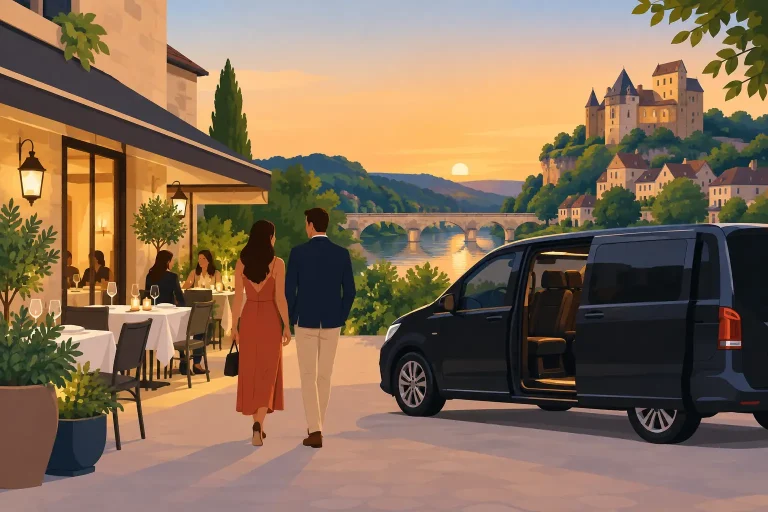
Wine-tasting transport is not only about getting from one vineyard to another. A long lunch in a village restaurant, a viewpoint over the vines, or time in Saint-Émilion can turn a pleasant outing into a memorable holiday day. Tell your driver if you would like these stops included, rather than assuming there will be time between tastings.
It is also worth considering what you will do with any wine you buy. A few bottles are easy to carry, but several cases take up space. Let the driver know if you expect to make larger purchases so this can be considered when the vehicle is allocated. If you are travelling onwards by air, check your airline baggage allowance and the rules for carrying bottles before buying more than you can reasonably take home.
Do not plan to drive yourself after tasting, even if you feel fine. Tasting pours can add up, and rural roads demand full attention. Booking a licensed driver allows everyone in the group to enjoy the experience without appointing a designated driver or relying on a last-minute taxi that may not be available.
Book early for busy dates
Advance booking is particularly helpful for weekends, public holidays, wedding season and the summer months. Availability can also be tighter when major events are taking place in Bordeaux, Saint-Émilion or nearby towns. If your transport is connected to an airport arrival, allow a little flexibility for flights, baggage collection and delays.
For a special occasion, such as a birthday, anniversary or group holiday, book transport as soon as your vineyard appointments are confirmed. This gives you the best chance of securing the times you need and means the whole group knows where to be and when.
Last-minute requests can sometimes be accommodated, but rural transport is not like stepping outside a city hotel and joining a taxi rank. A pre-arranged service is the dependable option, especially if your accommodation is outside a town or your return is planned for the evening.
Confirm the practical details before the day
A day or two before travel, check the collection time, address and mobile contact details. Keep the vineyard confirmation messages handy, particularly if an estate has a separate visitor entrance or asks guests to arrive at a specific gate. If your accommodation has a narrow lane, a coded entrance or an unmarked driveway, tell your driver in advance.
It helps to agree what happens if a tasting runs late. Some vineyards are generous with their time, while others work to a strict schedule. Let your driver know if you expect to need a short amount of flexibility between visits. Equally, if you have dinner or a flight after the tour, make that fixed deadline clear from the outset.
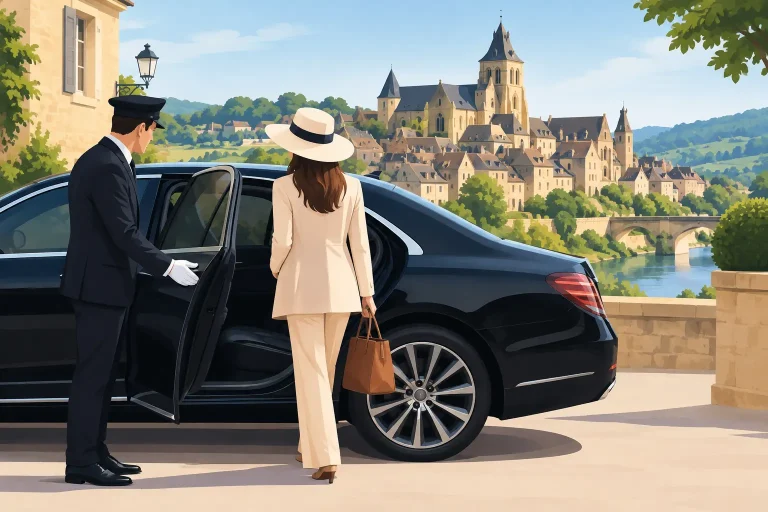
For English-speaking visitors, direct communication makes this much easier. AC Private Chauffeur provides pre-arranged vineyard journeys across Lot-et-Garonne, Dordogne, Bordeaux, Bergerac and surrounding destinations, with an English-speaking licensed driver and door-to-door collection.
A well-planned vineyard day should feel unhurried from the moment you leave your accommodation. Send your pick-up location, destinations, date, time and passenger numbers early, then leave the rural roads and the journey home in safe hands.